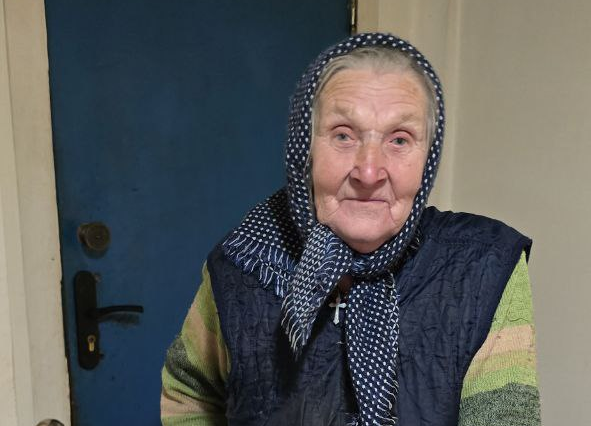
In the darkest of times, it is especially vital that someone brings light into everyday life. For many years, the Realis Charitable Foundation has been supporting those standing on the edge—people who have lost their homes, loved ones, and the ground beneath their feet, but not their dignity. The foundation’s aid is not just about food packages or sweets. It is, above all, about care, attention, and keeping the person at the center. And as Ukraine trembles under the weight of war, Realis goes exactly where help is needed most—to forgotten villages, abandoned by the state, where lonely elderly people, exhausted mothers, and children in need of warmth still live.
This help becomes life-saving not only physically. It restores hope. It tells people: you are not alone. It speaks simply and sincerely: we are near, we hear you, we see you, we care. Today, villages that were once under occupation and are now suspended in a fragile stillness—places where life barely flickers—need such support more than ever. Because renewal starts with small things—with humanity. That is why Realis went to Ragivka.
Long ago, the village of Ragivka was growing rapidly and attracting new residents. The population increased, people had jobs, started families, and raised children. The village thrived.
But after the Chornobyl disaster, everything changed. Nearby villages were evacuated to safer areas, while Ragivka remained. Those who could, left on their own. The population dropped drastically.
When the full-scale invasion began, villagers had no time to evacuate. Due to its proximity to the Belarusian border, the village was instantly occupied. The first day of the war began with explosions at four in the morning. No one wanted to believe a real war had begun, but fear drove people to hide in their cellars.
“Living in the cellar, sleeping fully clothed, constant fear for yourself and your loved ones—that’s what we went through in the first days of war and during the occupation,” recalls Mrs. Valentyna, who helped the Realis team organize humanitarian aid distribution. “Now, there are very few people left. There’s no one to work—only the elderly remain. But everyone who still cares for the village is doing everything possible—and more—to keep life going. Our people are kind and hardworking, but many are broken. The men who stayed often struggle with alcohol. And the children in such families suffer deeply.”
“I was four months pregnant and told no one in the village,” says Tetiana. “My husband and daughter were with me in the cellar. I was terrified, especially for the unborn baby. My husband wouldn’t let me out of the cellar, trying to shield me from the occupiers. But I longed for fresh air and peace of mind. The birth was difficult—my emotional state affected the baby. She didn’t want to turn, so I needed a C-section. She was born very anxious, and now that she’s a bit older, she still startles easily and always seeks protection from me.”
Villagers shared that, for safety, they spoke to the Russian soldiers in their language during the occupation. When the soldiers began breaking into the store and stealing food, the owner offered to hand it over voluntarily to avoid looting. Different kinds of soldiers passed through the village: some were aggressive, others more restrained.
One of the most painful stories was about a young woman who was about to give birth. Because of intense shelling, she couldn’t be taken to the maternity ward in the district center. The occupiers transported her to Belarus. Her fate remains unknown. Villagers hope that both the mother and baby survived.
When I asked whether anything terrible happened in the village, people lowered their eyes and quietly replied:
“Yes, there was torture… But we don’t want to talk about it. We want to forget.”
The current challenges facing the village were described by Oleg, the newly appointed village elder. He’s only been in office for three months. Before this, he worked in Kyiv but decided to return and take care of his native village.
“There are hardly any young people left. Healthy men are few. Those who can fight—are at the front. The ones who return are wounded, both physically and emotionally. Many elderly women can barely cope on their own. They need help.”
The village is becoming deserted. Many houses stand without windows, without people.
“Come, move in,” says the elder. “But there’s no work. Even the school had to be closed. The school in the neighboring village is on the brink too. A bus brings children from four villages, but the situation is getting worse.”
Villagers survive thanks to their gardens. The fields they used to plant are now mined—over 200 hectares. The forests, too, are dangerous—picking mushrooms or berries is no longer possible.
Despite it all, people try to keep their homes in order, care for the village, preserve its beauty and cleanliness.
On the day the Realis team arrived with humanitarian aid, villagers had already gathered near the community center. A group of women, riding a small trailer hitched to a tractor, were preparing to whitewash curbs and poles ahead of Easter.
“The village should be clean and beautiful,” says Mrs. Liudmyla, the elder’s wife. “If we all pitch in—it will look nice. We don’t lose hope, we don’t give up, we don’t stop loving life. And the land won’t wait. We believe in God, go to church, and every day we do all that we can.”
Ragivka is not just a point on the map. It is a symbol of survival, resilience, and humanity in a place where everything seemed destined to fade away. The people who remain are holding on not for themselves—but for the land, for memory, for those who are yet to return.
And it is in places like this that help brings back faith. The Realis Charitable Foundation came to Ragivka to support its residents. The team brought food packages and holiday sweets for the children—not just sustenance, but a gesture of care. It was not a one-time act, but a sincere desire to say: you are not alone.
Realis paid special attention to those who, due to age or health, could not make it to the community center—volunteers personally delivered packages to each such home. Every visit is not just logistics, but a living conversation, a smile, a gesture of support more powerful than a thousand words.
Life still stirs here: in the small gardens, in the freshly painted curbs, in daily chores, in gratitude and kind words. Despite the losses, despite the pain, the village breathes. Quietly, with effort—but it breathes. Because there are those who do not give up. And there are those who offer their shoulder. There are those who believe. Believe that Ragivka will live again—just like all of Ukraine!
Date: 05.06.2025